
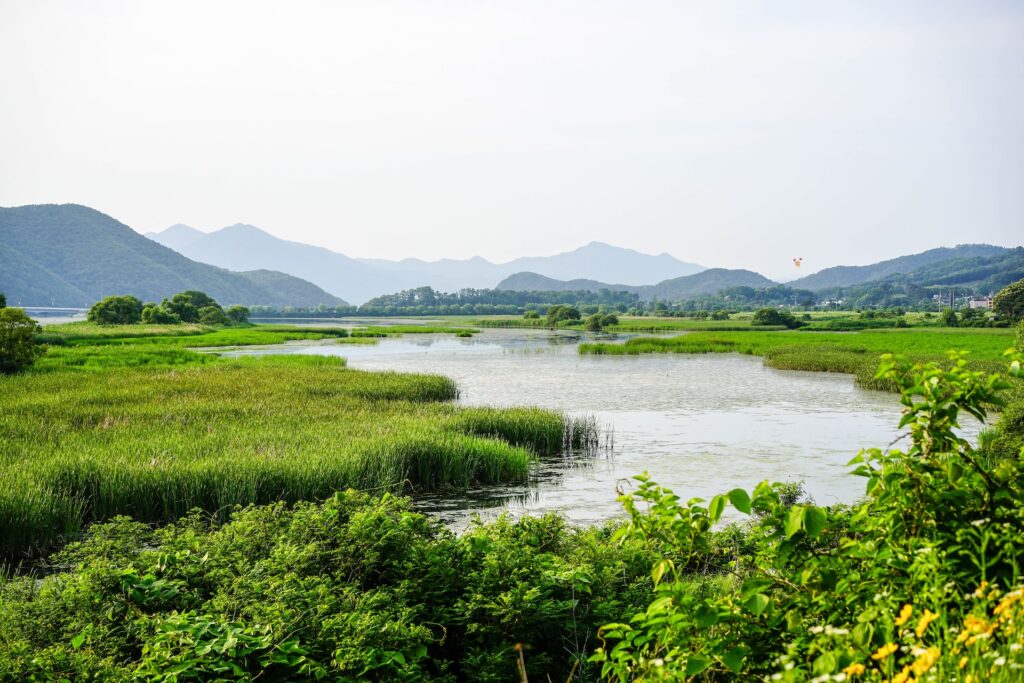
“The wildest and richest gardens that we have” – Henry David Thoreau
So wrote Henry David Thoreau when speaking of wetlands. This 19th-century philosopher, poet, and essayist loved wetlands, particularly swamps. He wrote about them often in his poetry. For him, they were a source of intricate beauty and life: nature in its purest, untamed state.
What are wetlands?
Wetlands, aside from being the inspiration of great works of poetry for some, are treasured not only for our health and livelihood, but also for the vast array of species who call it home. We need them as much as they need us to do the right thing for their survival. Their destiny is in our hands.
To most, a wetland is a marsh or bog with no real significance in our lives aside from its tranquil serene setting. Nothing could be further from the truth. Wetlands do consist of marshes and bogs, but also tidal mud flats, ponds, and estuaries. There are both coastal and inland wetlands. Our coastal wetlands are found along the Atlantic Ocean, as well as other coastal areas of Canada. Approximately 13% of Canada’s terrestrial areas are covered by wetlands, which equates to 1.2 million kilometres. They are closely linked to estuaries, where sea water mixes with fresh water, forming an environment of varying salinities.
Although fluctuating in water levels due to tidal action, these mud flats are largely unvegetated, although some grass-like plants have adapted to the saline conditions. Inland wetlands are common along rivers and streams (riparian wetlands), and along the margins of lakes and ponds. Here, we find the marshes and wet meadows that are the habitat to herbaceous plants and shrubs and wooded swamps dominated by trees.
A crucial ecosystem
Wetlands need to be conserved, preserved, and in some cases, restored to a close replica of their original state. How we manage to do just that may be found in a Wetland Conservation Policy proposed by Nova Scotia. This new policy has been drafted as part of meeting a commitment to prevent the net loss of wetlands that was legislated under the Environmental Goals and Sustainable Prosperity Act, which was passed in the Nova Scotia Legislature in 2007.

The draft policy includes objectives designed to ensure that our wetlands continue to flourish. It also aims to prevent a net loss of this vital resource and allow for sustainable development in our communities.
It’s not known how much wetland has been lost to development, since historically it was not well documented. To suggest that wetlands are an intricate ecosystem on which both humans and wildlife depend would be an understatement. They are essential in that they:
- Maintain watershed health by controlling erosion, flood waters, and slowing runoff rates
- Protect our health by filtration of organic waste, bacteria, and excess nutrients such as nitrogen
- Store carbon from the atmosphere
- Minimize storm surge along our coastlines
- Recharge groundwater reservoirs, important for drinking water supply
- Provide a habitat for wildlife, fish, and plants, many of which are endangered
More initiatives to protect wetlands
An estimated $7.9 billion worth of benefits are provided by wetlands. Maintaining this healthy natural ecosystem rather than building water treatment systems to rectify poor water quality is more cost-efficient and justified.
Along with the Wetland Conservation Policy, the Atlantic Habitat Partnership Initiative (AHPI) was launched in 2009. In partnership with the Government of Canada, Atlantic provincial governments and Ducks Unlimited Canada, this Initiative’s mandate is also protection and conservation of significant wetlands across Atlantic Canada under the Wetland Sustainability Fund.
Sometimes development will impact a wetland; it’s unavoidable. The general philosophy of the Conservation Policy draft contains measures to ensure that unavoidable impacts are minimized or, for impacts that can’t be minimized, to guarantee compensation in the form of new wetland creation or restoration to prevent the net loss of wetlands.
Nova Scotia is still rich in wetland habitat despite a substantial loss in the past. Maintaining a rich and healthy environment is imperative while sustaining development in our communities. The best advice is to avoid wetlands if at all possible.
Let’s hope that our memory of wetlands is not found only in the words of poetry.