
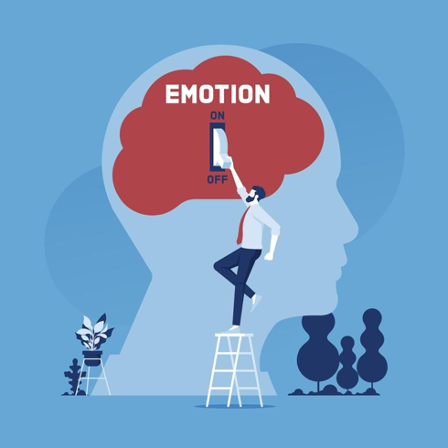
When you think of all the qualities that make a good leader, you think of caring, empathetic, courageous, inspiring, and much more. But what combines all of these qualities is emotional intelligence. When I was much younger, the kind of intelligence that mattered was how to solve mathematical problems and being brilliant in schoolwork. But I grew up to understand that this is not the most relevant intelligence when it comes to excelling in life. Top of the list is emotional intelligence.
What is emotional intelligence?
Emotional Intelligence (EI) was first defined as an ability. This ability possessed by humans allows us to monitor our own as well as others’ feelings and emotions. It then allows us to decipher and distinguish these feelings and emotions and use the information secured to guide one’s thinking and actions. This definition was given by Peter Salovey and John D. Mayer.
Over the years, EI has been defined in various ways, but it all boils down to the same meaning. EI means recognizing, understanding, deciphering, and managing feelings and emotions in oneself and others. Basically, it’s the ability to take control of one’s emotions. There is a skill set that enables individuals to navigate their emotions effectively, empathize with others, build and maintain strong relationships with others, and make meaningful decisions. EI is crucial in various aspects of life, including leadership and personal development within a business context.
Components of emotional intelligence
To understand our emotional Intelligence quotient (EQ), it is important to consider its determinants. Different studies have emphasized the importance of certain aspects, which collectively shape our EQ as humans:
- Self-awareness: refers to our ability to understand our emotions, strengths, weaknesses, values, and goals. It is a skill that develops over time and allows us to consciously assess our state, motivations, and reactions.
- Self-regulation: focuses on managing and controlling our emotions, impulses, and behaviours. Those who have mastered self-regulation can adapt to situations, easily demonstrate resilience, and avoid impulsive or destructive behaviours.
- Motivation is closely tied to our drive and enthusiasm for achieving professional goals. While some struggle with motivation for tasks, others are highly motivated and self-driven. They set standards for themselves and remain persistent in the face of challenges.
- Empathy refers to the understanding and sharing of someone’s emotions. It enables individuals to emotionally connect with others, show comprehension, and offer support. This essential element fosters effective communication, teamwork, and conflict resolution.
- Social skills are most important since they are building and maintaining positive relationships, communicating effectively, influencing others, and working collaboratively in a group.
Importance of emotional intelligence in leadership and personal development
The best leaders are people who can influence and inspire others. They’re credible and show empathy; they can alleviate resistance to change and do much more. Their ability to do all this is rooted in their EI. Anyone who claims to influence and inspire others should first have established influence over themselves. EI enables leaders to do the following:
- It helps the leaders be aware of their own emotions and those they are leading.
- It helps leaders to have the ability to understand their own emotions.
- It helps leaders to be able to use emotional intelligence stories to inspire those who look up to them.
- It helps the leaders to be able to connect, perceive, and understand the emotions of others.
- It helps the leaders with the ability to manage change and adjust where necessary.
Most importantly, EI gives the ability to manage conflict. There’s no team without conflict. But if the leader has a high EI, it would be very easy for the leader to resolve the conflict.
Differences between emotional intelligence and cognitive intelligence
Effective leaders in all industries share the core quality of being very strong problem solvers. A meta-analysis of 151 studies discovered a link between leaders’ work effectiveness and IQ in a variety of contexts. The relationship will likely be stronger when the leader participates actively in decision-making and is not unduly stressed. The researchers also discovered evidence to corroborate the conventional wisdom that leadership performance is most affected by intelligence when the leader is not significantly smarter than the majority of group members. Again, even if the difference is insignificant, group members prefer that their leaders are smarter than the typical group members.
Cognitive intelligence allows humans to know, learn, understand, and interpret things for what they really are. Meanwhile, EI is all about emotions. It is the ability to identify emotions relating to others and the ability to communicate socially. It helps one to be able to manage and express feelings. Cognitive intelligence is one’s IQ and remains fixed throughout one’s life. It is constant and doesn’t change even from birth. However, EI is considered to be an ability that can be sharpened and improved over time.
Enhancing self-awareness
Dr. Tasha Eurich, a renowned psychologist, describes self-awareness as “the meta-skill of the 21st century and the cornerstone of excellence in performance, wise decision-making, and enduring relationships.” It is, unfortunately, rare to receive frank, unbiased evaluations from coworkers, employees, friends, and even family members. We are surprisingly bad judges of ourselves and how we come across.
Self-awareness is defined as the ability to focus on oneself and how one’s actions, thoughts, or emotions align or don’t align with one’s internal standards. Becoming self-aware is not as difficult as it would seem. There are steps one can follow to achieve this.
First, one could make the decision and set the mindset that they want to know the truth about themselves. Second, one should get more feedback. A repeated research result is that other people usually see a part of us that we don’t see, another perspective. Third, one should ask oneself “what,” not “why.” Asking the why question only makes one dwell on the past and not on how to fix the present and make the future better. “What should I do to change this?” and “What are the possible solutions?” are examples of the “what” questions we want to be asking ourselves.
There’s the story of a manager who although, is amazing at his job, competent, and all that has a terrible character when it comes to relating with his workers. He would yell at them at the slightest provocation, and he had no idea how he was coming off to these people. So, once he got through the process of getting feedback from his team, understanding the things he needed to work on like asking the “what” questions and showing empathy, things started to change for him. He was able to turn around not just his own performance but that of his teammates too.
Developing self-regulation
It’s important to know that having self-regulating skills is key when it comes to managing one’s emotions, impulses, and actions. People have grown to have a balanced EI since they’ve been able to key into self-regulation.
Successful people use the self-regulation skill every day and it helps them to sustain and shift their attention when necessary. It helps them manage and control their thoughts, actions, and emotions in this chaotic and complicated world of ours.
One of the ways with which the skill of self-regulation can be developed is by being conscious of one’s emotions. Being aware of how one is feeling is key when it comes to bettering oneself in this skill. It is important to be mindful. Taking deep breaths, meditating, or just taking a moment to reflect are key practices to help one improve.
There’s also the process of attunement. Attunement is a process of tuning in to what is going on with someone else and allowing our internal state to react to their internal state. People are at once made comfortable if we can mirror others’ emotions in a bid to help them calm down, then that can go a long way.
It’s also great to not allow things to go on in a rush. Take a pause. It’s important that as time goes on, and life gets a bit messy and stressful, one should take a pause, gather their thoughts, and make sure to respond to life in the proper way necessary. It’s important to also know that if you’re feeling something, then that feeling is real. If you’re feeling jealous of someone or something and you feel like you shouldn’t feel jealous of that person or thing, it’s crucial to know that your jealousy is real. One shouldn’t shy away from it or deny it. It’s important to accept it.
Stress management and resilience in leadership
One of the most important things we can all do right now is managing our own stress as a leader. This is very important because if you are managing or leading a team, or perhaps you’re simply inspiring or mentoring others, you’re sending out signals to them, and one must be mindful of the signals we send. We’ve learned about mirror neurons over the past two decades. It has become common knowledge that our emotions are contagious, and our emotional cues set the pace for others. Therefore, it is very important that we know how to control and manage our own stress so that we can lead more effectively rather than needlessly contributing to the stress of others.
Many of us have come to the knowledge of knowing that it is possible to separate the actual fact of what has happened from how we interpret it and how we respond to it.
We’ve been so engrossed in so much screen time, social media, and work that we’ve totally forgotten how important it is for one to have time for self-care. It might feel necessary to keep working around the clock all the time but getting an adequate amount of sleep is more crucial.
Also, cultivating trusted friends, families, and colleagues that you talk to is equally important. It helps keep a clear head so you don’t end up venting on employees. That is going to be a bad move. Finding the right person to talk to outside that space rather than in the space is important.
Balancing personal and professional life
The concept of finding a work-life balance is such a hot topic that many forget exactly what it really is. Balance is achieved only between two opposite things, and work and life shouldn’t be opposite to one another.
Studies and research have shown, and even Simon Sinek has confirmed, that there is no level of yoga or meditation that can be done that will help you achieve work-life balance if they are not in sync. One aspires to achieve a state in which work and personal life harmonize with each other.
Such harmonization relies on not only the nature of the job but also on how well one manages their time. Time management is a key ingredient in unifying work and personal life.
When trying to have family time, keeping a clear head is a good idea. We can try as much as possible not to think of work at that moment. It’s important to always be in the moment when having family time with the ones we love. Finding a balance between life and work is key. Practicing presence, fostering support networks, taking regular self-reflections, and setting boundaries can really help in achieving wonders.
Long-term benefits of emotionally intelligent leadership
Possessing a high level of EQ not only enhances your abilities as a leader but also empowers you to cultivate higher EQ in others. If you desire to witness growth and excellence among the individuals in your organization, it’s your responsibility to initiate this positive emotional influence.
If you’ve ever had the privilege of working under someone who embodied qualities like kindness, generosity, respect, confidence combined with humility and a genuine concern for your wellbeing – a leader who made sure you felt valued, heard, and safeguarded – then you’ve experienced the guidance of a leader with exceptional EI.
You might recall the invigorating impact they had, likely leaving you inspired and motivated to give your best effort, willing to go above and beyond. EI creates a chain reaction throughout your entire organization. A leader who possesses not only a deep understanding of themselves but also the capability to perceive the emotional requirements of others and respond to those needs with sensitivity, diplomacy, and composure will cultivate a highly engaged team that takes pride in their contributions.
It’s evident that while academic prowess and technical skills have their place, emotional intelligence is an essential component of any proficient leader’s skill set, and its advantages are beyond measure. Fostering the development of your EI is crucial for projecting a strong presence and leading with authenticity. This shift is the most impactful action you can take to refine your leadership capabilities and construct robust interpersonal connections with both employees and clients.