
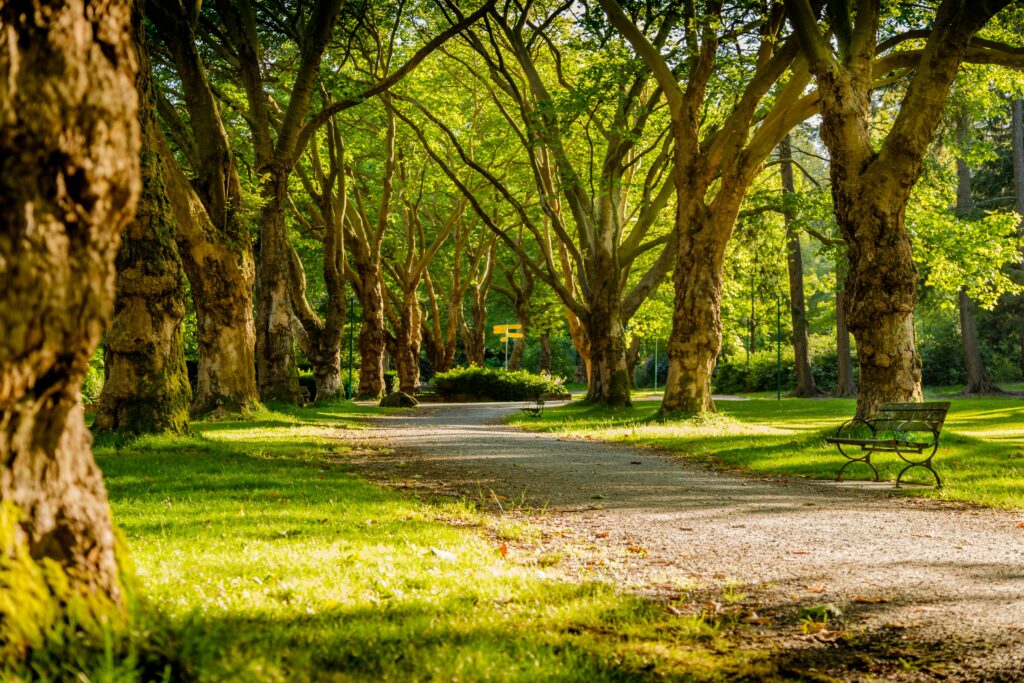
You feel a slight warmth come over you. It’s initially comforting, like a warm embrace from a loved one. A faint glow emanates from the floor-to-ceiling windows as you slowly open your eyes. The feeling is somehow different than you’re used to.
As you roll out of bed, you barely notice the floor beneath you. It’s like stepping onto a cloud. “Amazing, isn’t it?” you think to yourself. Technology can be so simple yet revolutionary in the proper context and combinations.
As you step onto the balcony, the tinted glass doors part as if to welcome you outside. A breath of clean, crisp air is all it takes to remind you where you are.
Gazing across the sprawling landscape, you’re met with yet another reminder of the incredible transformation the world has undergone. Barren industrial wastelands now radiate vitality and life. Lush green vegetation spans the horizon. It’s merely a taste of the vibrant ecosystems thriving across our beautiful planet.
Strategic Site Selection: Laying the Groundwork for Our Eco-City
Thinking back to the day you joined Operation Oasis, it’s hard to believe that a decade has passed. In the blink of an eye, the city has transformed from a deserted industrial site to a healthy, vibrant community of like-minded individuals looking to impact our planet positively.
Building an eco-city on this brownfield site was a strategic choice. While it would have been easier to start with a blank slate by developing our city on fresh, untouched land — especially considering that half of the earth’s land is currently uninhabited by humans — we chose a path that upholds our core values of sustainable development.

Initially, we had planned to build our eco-city on a piece of arid desert land, leveraging the many advances in irrigation technology to help bring our vision to life. But even deserts, seemingly barren compared to the earth’s lush rainforests, have unique ecosystems composed of incredibly resilient plants and animals that have evolved and adapted to their harsh environment. These rich and diverse ecosystems deserve our utmost respect and admiration. In hindsight, the choice to develop on a brownfield site was obvious.
At its core, Operation Oasis is about rejuvenating our planet and its diverse ecosystems while learning from past mistakes and fixing our ways. That means facing our past head-on. In that context, a brownfield site represents the ideal canvas for innovation.
The Downtown District: The Heart of Our Eco-City
Roaming through the heart of our eco-city, your eyes are immediately drawn to a majestic building. Once an old textile mill, this impressive structure was in complete disrepair before its restoration. Shattered windows, peeling paint, and rusting metal highlighted the run-down building. But with a keen eye and creative ingenuity, we saw the true beauty beneath its rugged exterior. The Grand Palace Hotel now stands as the crown jewel of the city.
Admiring its rustic exterior, you can’t help but marvel at the large stone blocks with which it was initially constructed. Reminiscent of an ancient castle, this magnificent building has weathered the sands of time with grace and elegance. Inside, the vast expanses of open space serve as a canvas for unlimited creative expression — an architect’s dream.

Attribution: Photo by Kader D. Kahraman
Within the massive walls of the Grand Palace Hotel lies a hidden gem: the Leaf & Stem Brasserie. A farm-to-table restaurant featuring highly-refined vegan cuisine, the Leaf & Stem is committed to offering its guests the freshest, most nutrient-rich, organic, and environmentally sustainable ingredients in the world. Having earned a 3-star Michelin rating, it lives up to its reputation as one of the most prestigious establishments in the world.
In addition to its world-class cuisine and impeccable service, the Leaf & Vine’s decor stays true to the building it resides in. High-top tables crafted from refurbished barrels, chairs built out of reclaimed wood sourced from the old textile factory, and room dividers made from salvaged metal grates create intimate dining areas. Each restaurant decor element carries a piece of the city’s rich history, preserving its legacy for future generations.

Attribution: Photo by Amadeus Moga on Unsplash
University Life: The Brains of Our Eco-City
After dinner, you take a leisurely walk through the charming downtown district. Passing by the Environmental Institute of Technology (EIT) — the city’s premier post-secondary institution — you can’t help but feel an energy emanating from the campus. Students at EIT are among the most passionate in the world regarding their studies, evidenced by the numerous distinguished alumni who have graduated from the institution. The school has gained international acclaim for its Environmental Engineering program, featuring highly esteemed faculty members renowned for their groundbreaking advancements.
Highly regarded for its athletics programs, EIT offers its student-athletes a full suite of world-class training facilities. True to its mission statement, these facilities are leading edge in environmental sustainability.
Recycled rubber from old tires makes up the surface of the athletic track, along with the rubber mats covering the floors of the weight rooms and conditioning spaces. Rubber’s shock-absorbing qualities make it an ideal choice for athletic facilities, reducing athletes’ and equipment’s wear and tear during high-impact activities.

Attribution: Photo by Andrea Piacquadio
Reclaimed hardwood, ideal for building the indoor basketball courts, offers a distinctive rustic feel that has become part of the city’s identity. Meanwhile, over at the Olympic-sized swimming pool, recycled glass filter media is used in the pool’s filtration systems. Not only does recycled glass offer a more sustainable solution than traditional sand filters, but it also delivers superior water purification qualities.
Central Park: The Soul of Our Eco-City
Your journey continues in nearby Central Park — inspired by the famous park in Manhattan, New York. Artistic benches and sculptures, crafted from gears and metal scraps by talented local artists, accentuate the landscape’s natural beauty.

Attribution: Photo by Сергей Дрозд on Unsplash
Beneath your feet, you will find yet another transformation; cracked concrete, once stained with oil and chemicals, has been creatively used to pave the pathways, creating a beautiful mosaic throughout the city. Bordering the pathways are lush gardens, featuring a diverse selection of native plant species.
Breathing in the crisp, clean air, you gaze over to the park’s west edge, where you notice a swan gracefully feeding in the wetlands: a beautiful sight, yet another reminder of the diverse population that calls our city home. Once contaminated with oil, heavy metals, and chemical residue, the soil and water in this area have been transformed into a constructed wetland that now filters runoff, improves water quality, and provides a habitat for local wildlife. An essential element in the design of this wetland area is a process called phytoremediation, where specific plants detoxify the soil by breaking down and absorbing pollutants, making the soil fertile once again.

Attribution: Photo by Josephine Baran on Unsplash
Treading further down the path toward the park’s south end, you approach the grand entrance to the Central Park Amphitheater. Previously an old warehouse, the sturdy loading docks have since been converted into a large outdoor stage where local musicians and performers dazzle the citizens of our vibrant yet charming eco-city. Meanwhile, the warehouse’s vast interior space is now home to the city’s Art and Cultural Center, featuring a wide assortment of independent art galleries, workspaces for local artists, and music, dance, and theatre performance areas.
Beyond Rejuvenation and Restoration: The Ongoing Journey of Our Eco-City
Thinking back over the past decade, it is clear that our goal to leave a net positive impact on our planet has begun to bear fruit. While certainly ambitious, the collective will and desire of the city’s residents have made Operation Oasis a reality here at home and a model for urban centers the world over. By setting the bar for what is possible in urban environmental sustainability, our city is now a driving force for global change.
Our journey is far from over, though; it has just begun. What we have just experienced barely scratches the surface of what lies behind the curtain of our eco-city. While restoring and revitalizing our brownfield site was an essential first step in helping our planet, the most significant impact comes from the revolutionary technology and techniques we have integrated, transforming our eco-city into a thriving hub that enhances rather than exploits our natural world.
1 thought on “Designing the Eco-City of the Future: From Brownfield to Green Oasis”
Very good article. Brilliant idea, it would make our world a much better place to live in.