
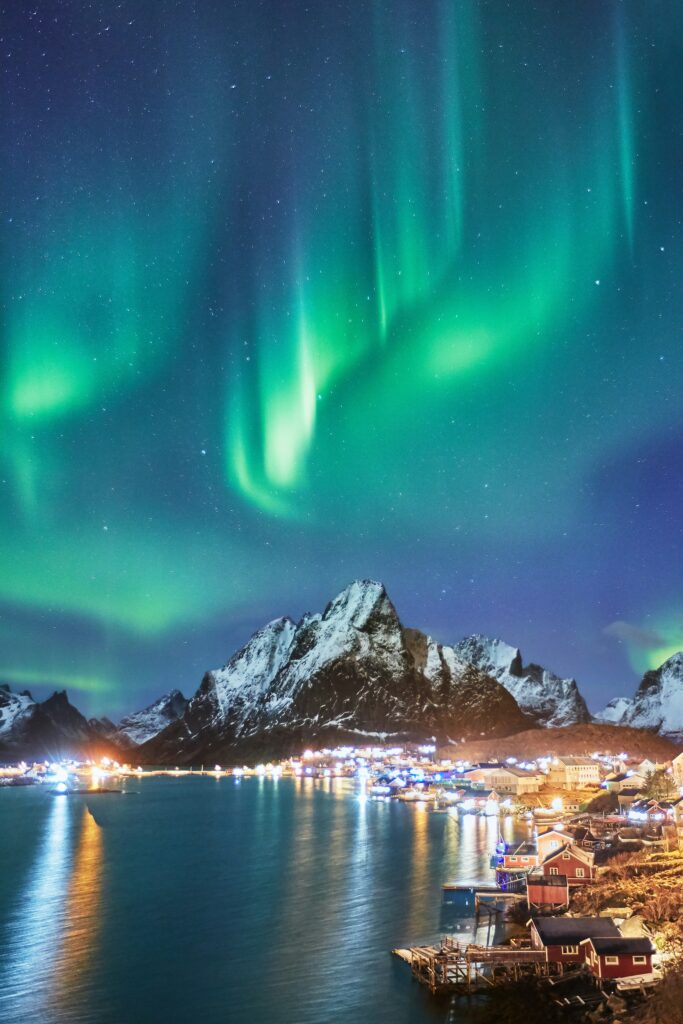
Imagine a night sky transforming into a mesmerizing dance of colours—emerald greens, vibrant pinks, and ethereal purples ripple across the sky, leaving spectators in awe! This natural phenomenon, the Aurora Borealis, or Northern Lights, has captivated humanity for centuries. Unlike any light show created by man, these celestial displays are a wondrous spectacle crafted by nature. The Northern Lights are more than just a visual treat; they are a source of mystery and wonder. Northern Lights are woven with several myths and legends in the Ancient cultures, attributing them to everything from the spirits of ancestors to omens from the gods.
Visible primarily in the high-latitude regions of Northern Canada, Alaska, and Scandinavian countries, the Aurora Borealis offers an extraordinary experience for those fortunate enough to witness it. The science behind this breathtaking event is as fascinating as the visual display. Charged particles from the sun collide with Earth’s magnetic field, producing radiant colours that paint the sky in an ever-changing palette. “Auroral light comes largely from electrons hitting oxygen and nitrogen atoms and molecules in the upper atmosphere, the same phenomenon that produces the glow in a neon lighting tube.” From soft pastels to vivid hues, the auroras showcase a remarkable array of colours—green, pink, red, blue, purple, and even hints of yellow.
Modern observers, equipped with scientific understanding, still find themselves entranced by the sheer beauty and power of the auroras. Whether you are an avid sky-watcher or a curious traveller, the Aurora Borealis offers an unforgettable glimpse into the splendour of our natural world, reminding us of the planet’s hidden wonders and the universe’s boundless beauty.
The Spirit World of the Cree

In the vast, snow-covered expanses of the Canadian Arctic, where the night sky often blazes with the shimmering colours of the Aurora Borealis, the Cree and Chipewyan peoples have long woven rich tapestries of myth and legend around this natural wonder. These indigenous cultures, deeply connected to the land and the rhythms of nature, perceive the Northern Lights not merely as a meteorological phenomenon but as a profound spiritual experience.
For the Cree, the Northern Lights are the dance of the spirits. They believe that the auroras are the spirits of their ancestors, joyously dancing across the sky. “Growing up I would ask nôhkom who wâwâhtêwak were, she would say those were spirits dancing,” Simon Bird says. “This is why I say, ‘those that go in circles,’ because wâkôtêw means to walk in a curve, not straight. Ever since then I always believed these were spirits dancing.” This celestial ballet is a powerful reminder of the connection between the physical and spirit realms. According to Cree tradition, the spirits are most active and vibrant during the cold, clear winter nights, their luminous presence a source of guidance and reassurance for the living.
The Cree’s interpretation of the Northern Lights carries a deep reverence and respect for their ancestors. They believe that watching the auroras is an opportunity to receive messages from the spirits. This belief fosters a profound sense of continuity and belonging, linking past generations to the present and future. The lights are not merely a spectacle but a sacred phenomenon, embodying the wisdom and protection of those who have gone before.
The Chipewyan Spirit Animals

In Chipewyan (Algonquin) mythology, the Northern Lights hold a slightly different yet equally captivating significance. They are often associated with the spirits of animals, particularly the caribou, which are central to the Chipewyan way of life. The Chipewyan people view the auroras as the spirits of these animals, guiding hunters and providing them with success and safety. The dancing lights are thought to illuminate the path for hunters, helping them find game during the long, dark winters.
One enchanting Chipewyan legend tells of a time when the auroras were absent from the sky. The world was plunged into darkness, and the people struggled to survive. In their desperation, they sought the help of a wise and powerful shaman (a religious or mystical expert versed in healing), who journeyed to the spirit world to plead for the return of the lights. After many trials, the shaman succeeded, and the spirits agreed to restore the Northern Lights, bringing light and hope back to the people.
Both the Cree and Chipewyan myths imbue the Northern Lights with a sense of agency and purpose, transforming them from mere atmospheric phenomena into active participants in people’s lives. The lights are not random or indifferent; they are alive with meaning and intention, a testament to these cultures’ deep spiritual connection with the natural world.
Experiencing the Aurora Borealis through the lens of Cree and Chipewyan mythology adds depth and wonder to the spectacle. It’s not just about witnessing a beautiful display of lights; it’s about engaging with a rich cultural heritage that sees the auroras as a bridge between worlds, a living narrative that connects the earth and sky, the past and present.
For those fortunate enough to stand beneath the swirling colors of the Northern Lights, knowing these stories transforms the experience. The lights become more than a visual marvel; they become a vibrant, living canvas painted with the dreams and beliefs of ancient peoples. This connection to the past enriches the present, reminding us of the profound ways in which nature and culture intertwine, creating a legacy of beauty, mystery, and spiritual significance that continues to inspire and awe to this day.
Viking Warriors and the Northern Lights

In the rugged landscapes of ancient Norway, where fjords carve through the land and snow-capped mountains tower over dark, icy waters, the Aurora Borealis played a significant role in the mythology of the Vikings. For these seafaring Norsemen, the shimmering lights in the sky were more than just a natural phenomenon; they were divine manifestations intimately connected to their gods and legends.
The Vikings, known for their rich tapestry of myths and fierce warrior culture, saw the Northern Lights as reflections of their deities’ presence and power. One of the most captivating interpretations involved the Valkyries, the formidable warrior maidens who served Odin, the Allfather, (father of all gods, men, and beings created by him). According to legend, the Valkyries would ride across the night sky, their armor and weapons gleaming, creating the ethereal lights that danced above. These celestial maidens had a solemn duty: to choose the bravest warriors slain in battle and escort them to Valhalla, Odin’s great hall, where they would join the ranks of the honoured dead in the final resting place.
In this context, Aurora Borealis was seen as a beacon of glory and honour in this context. The Vikings believed that witnessing the Northern Lights meant the Valkyries were near, and for a warrior, this was a sign of impending greatness or a portent of a heroic death. The lights symbolized the divine interplay between life and death, bravery and destiny. To see the sky aflame with the colours of the Aurora was to be reminded of the gods’ watchful eyes and the promise of eternal honour for those who proved their valour.
Another layer of Viking mythology connected the Northern Lights to the Bifrost Bridge. This radiant rainbow bridge connected Midgard (the realm of humans) to Asgard (the realm of the gods). The Bifrost was guarded by the vigilant Heimdall, who stood at its entrance, ready to sound the Gjallarhorn to alert the gods of any impending threats. The Aurora Borealis’ shimmering lights were considered a reflection of the Bifrost, a visible link between the mortal and divine realms. This bridge was a vital artery in Norse cosmology, symbolizing the ever-present connection and potential interaction between gods and men.
The Northern Lights also had a more ominous aspect in Viking mythology. Some tales suggested that the lights were the reflections of the shields and armor of the giants, the Jotnar, who were the ancient enemies of the gods. In these stories, the auroras were a reminder of the perpetual struggle between order and chaos, light and darkness, that defined the Viking worldview. The Jotnar, residing in the distant and frosty realms, were forever plotting against the gods, and the lights were seen as a sign of their nearness and potential threat.
To the Vikings, every natural phenomenon was steeped in meaning and significance, intertwined with the actions and wills of their gods and supernatural beings. The Northern Lights, with their mysterious and awe-inspiring display, were a vivid reminder of the divine presence and the epic tales that shaped their understanding of the world.
The Inuit and the Celestial Game

In the stark and breathtaking expanses of the Arctic, where the ice and snow stretch endlessly under a canopy of stars, the Northern Lights—known to the indigenous Inuit peoples as the Aurora Borealis—hold profound spiritual and cultural significance. The Inuit, whose traditions span from Alaska to Greenland, perceive these celestial displays as more than just a natural spectacle; they are seen as powerful manifestations of the spiritual world, woven deeply into their mythology and daily life.
Among the Inuit communities of the Mackenzie region, the Northern Lights are believed to be the spirits of the departed, engaged in a celestial game. According to legend, these spirits play soccer with a walrus skull, their movements creating flickering and shimmering lights in the sky. This vision transforms the auroras into a lively, dynamic scene, a reminder that the spirits of loved ones continue to thrive and find joy in the afterlife. It is said that the auroras’ vibrant dance is the spirits’ way of communicating with those they left behind, offering a message of hope and continuity.
However, the relationship with the Northern Lights is not solely about comfort and joy. In some Inuit cultures, the auroras are seen as a more foreboding presence. It is believed that whistling at the lights can summon them closer, and if they come too near, they might capture the souls of those who are too bold. Parents often tell children to avoid drawing attention to the lights, cautioning them to show respect and reverence. This dual nature of the auroras—both playful and potentially dangerous—reflects the Inuit’s complex relationship with their natural surroundings, where beauty often intertwines with peril.
The belief in reincarnation among the Mackenzie Inuit adds another layer of depth to their view of the Northern Lights. They hold that the souls of the departed can enter the bodies of newborn children, where they reside until the child’s death, provided the child is treated with kindness and respect. If a child is punished too often, the spirit may choose to leave, seeking another vessel or returning to the celestial realm. This belief underscores the importance of nurturing and compassion, viewing every child as a potential vessel of an ancestral spirit deserving of gentle care.
In Greenland, the auroras have slightly different connotations. The Inuit of this region believe that the Northern Lights are the souls of infants who died at birth or those of unborn children playing in the night sky. The lights are thought to bring comfort, signifying that these innocent souls have found peace and joy in the afterlife. This interpretation transforms the auroras into a symbol of innocence and purity, a beautiful, eternal playground for the youngest and most vulnerable spirits.
For the Inuit people, the Northern Lights are an atmospheric phenomenon and a vital part of their spiritual and cultural identity. They remind them of the interconnectedness of life and death, the presence of ancestors, and the enduring cycle of rebirth. The auroras are a living tapestry, reflecting the beliefs and values of people who have adapted to one of the harshest environments on Earth while maintaining a deep, respectful connection to the natural and spiritual worlds.
To witness the Northern Lights through the lens of Inuit mythology is to see the sky as a vibrant canvas, where the stories of the past and the spirits of the departed come alive in a dance of color and light. It is an experience that goes beyond mere observation, inviting one to partake in a rich cultural tradition that celebrates the mysteries and wonders of existence.
The Fox Fires of Finnish Folklore

In the enchanting wilderness of Finland, where dense forests and pristine lakes stretch beneath a vast, star-studded sky, the Northern Lights—known as “Revontulet” in Finnish—have long been a source of myth and wonder. One of the most captivating stories from Finnish folklore attributes the auroras to a magical arctic fox. According to legend, this elusive creature runs swiftly across the snow-covered fells, its fur brushing against the ground and sending sparks into the sky. These sparks create magnificent lights that dance across the heavens.
This mythical arctic fox, or tulikettu, is said to possess supernatural powers. As it moves, its tail sweeps up snowflakes, catching the moonlight and igniting the brilliant colours of the Aurora Borealis. The name revontulet means “fox fires,” directly linking the phenomenon to this enchanting animal. The tale of the Arctic fox not only explains the lights but also highlights the Finnish people’s deep connection with their natural environment, where animals often hold significant symbolic meaning.
Beyond the fox, other Finnish myths interpret the Northern Lights as an omen of good fortune or a harbinger of important events. For the Sami people, the indigenous inhabitants of Lapland, the lights are regarded with great respect and are believed to be the energies of the spirits. They advise against drawing attention to the auroras, such as whistling or pointing, as it could disturb these powerful forces.
The Gift of Life and Good Fortune

In Japanese folklore, the Northern Lights are imbued with a unique and enchanting significance related to fertility. While Japan doesn’t typically experience the auroras, the lights are believed to carry a mystical aura that transcends geographical boundaries. According to legend, the Northern Lights are seen as a harbinger of good fortune and fertility. Couples who witness this celestial display are believed to be blessed with a child.
This belief stems from the idea that the luminous display is a divine message from the gods, a celestial endorsement of life and creation. The auroras’ vibrant colours and ethereal movements symbolize the energies of new beginnings and the life force. As such, witnessing the Northern Lights is considered an auspicious event, capable of enhancing fertility and blessing those seeking to start or expand their families.
The myth intertwines with broader Japanese cultural values that honour natural phenomena as manifestations of spiritual forces. The awe-inspiring beauty of the Northern Lights thus becomes a powerful symbol of hope and the promise of new life, reflecting a deep appreciation for the mysteries and wonders of the natural world.
Aurora Borealis: Bridging Ancient Myth and Modern Marvel

For modern viewers, knowing these ancient stories adds profound depth to the experience of witnessing the Aurora Borealis. As the sky lights up with otherworldly colours, one can almost hear the clash of swords and the gallop of celestial horses, feel the watchful gaze of Heimdall, and sense the eternal struggle reflected in the heavens. The Northern Lights become more than a natural spectacle; they transform into a living myth, a bridge to a time when gods and heroes walked the earth, and the sky was a canvas for divine stories.
The Northern Lights, with their mesmerizing dance of colours across the night sky, are more than just a natural spectacle. They are a tapestry of myths and legends, spanning cultures from the Finnish forests and Japanese beliefs in fertility to the spiritual tales of the Inuit and the Vikings’ divine manifestations. These celestial displays remind us of humanity’s deep connection to nature and the shared stories that bind us across time and space. Witnessing the Aurora Borealis is an awe-inspiring experience and a journey into our ancestors’ rich heritage, celebrating our world’s profound mysteries.