
Amal opened her eyes and looked around—a brutal darkness swept over her, depriving her of any beam of light. “Am I dreaming? Or have I been rendered sightless?” were her first thoughts.
Still drowsy and weary, she wanted to seek out her eyes and ensure they were intact, but her body was entirely numb. A heavy object weighed down her arms as she struggled to lift up her hands.
It suddenly dawned on her that she can’t see and can’t move. “Where am I? What happened?” Amal thought, as though darkness also struck her mind, expunging her memory. Amal rummaged in her brain for an evocation, any evocation.
As she gradually unearthed recollections from a recent past teeming with daylight—the chirping birds, the quarrel over breakfast, the outing with her friends, supper at home and more brawling, the resonant sound, and the loud thud—she was stifled by an overwhelming sensation. Her sleepiness faltered and transmuted into tenseness. Jabbing pain materialized in Amal’s throat like a needle poking deep in her larynx. It wasn’t long until the needle’s prick induced a sheer panic that dashed across her torso.
⏳
November 12 – 8:54am
It was a crisp November morning. Outside, an army of birds were hiding in her father’s garden, loudly cooing and chirping. The Middle Eastern autumn weather was as invigorating as always, the kind that sharpened Amal’s senses and energized her.
That morning was no different than any other. Amal cracked her eyes open at the sound of collared doves on her windowsill. Her vision slightly blurred as she rose from sleep, she still noticed the wide cracked hole in the wall opposite her bed. She intended to ask her father to patch it with joint compound and repaint the entire wall. Discontented with the light green colour and dinosaur theme, Amal wished to enhance the decor in her bedroom, formerly her twin brothers’ room.
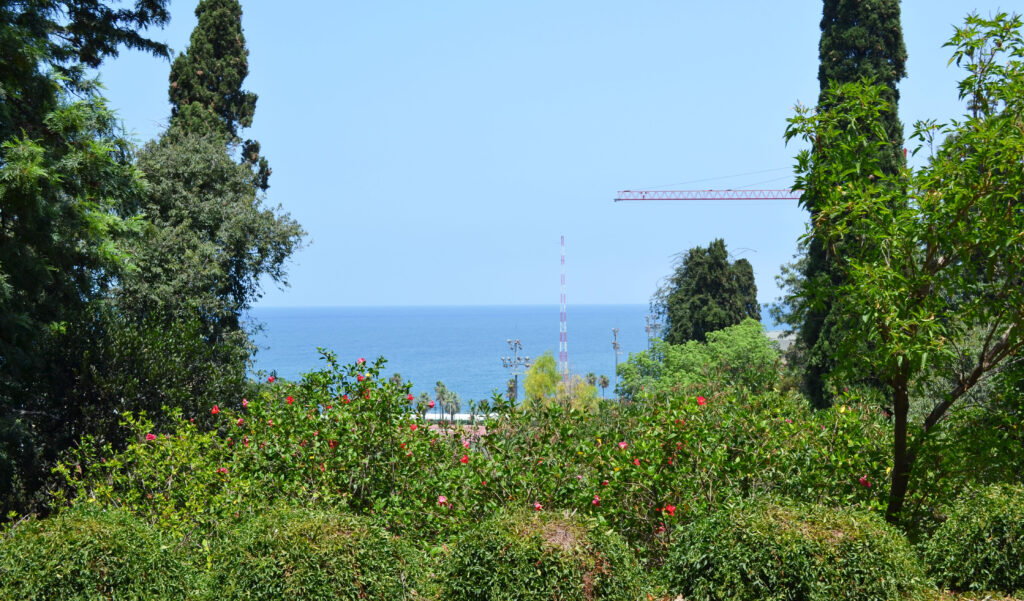
She loses several minutes gazing out the window, her eyes searching for the collared doves that have now settled in one of her father’s fig trees. Within sight of her bedroom window was the sea, which Amal contemplated every morning. “The most enchanting view,” she thought to herself, watching small waves engulf the seashore. “I can never get enough of it.”
Five weeks earlier, Amal turned thirteen years old. The youngest of five siblings and the only daughter, she has trouble contending with her obnoxious brothers. All equally loud and disruptive, Amal cannot be in the same room as them for too long. On most days, she wished she had sisters instead and, in a way, even her parents agreed. With each pregnancy, they prayed for a girl. A sweet, caring, and tender daughter. They kept hope alive until their first and only daughter was born.
Amal’s parents could vividly recall the day she came into this world—she arrived two weeks early on a bright and sunny Monday morning. “You just couldn’t wait to meet us all,” her mother often bantered. As for her father, he frequently said, “enti hebatAllah.” You are a gift from God. She was their beautiful surprise, their biggest blessing.
And so, they named her Amal—hope.

A movement from the other side of the door sent the doorknob rattling. Amal turned and a figure appeared in the entryway. “Sabaho habibti, yallah come join us for breakfast,” announced her mother and then walked out hurriedly, leaving the door ajar.
Amal followed her down the narrow hall and into the dining room where she settled close to one end of the table in the seat to her mother’s right. Her brothers were already seated and had carried this morning’s altercation over into the dining room. Her two eldest brothers, Rashid and Hamid, were particularly incandescent towards each other. The ambitious duo founded a small coffee shop two years prior with their father’s financial and moral support. Rashid was in his senior year of college pursuing business administration and Hamid was a sophomore studying economics. They had since dreamt of growing their business into a franchise, but as luck would have it, the brothers were inexperienced and faced several marketing and financial problems—issues beyond Amal’s comprehension. Lately, Rashid and Hamid disagreed more overtly, even showing signs of immaturity occasionally.
For a brief moment, Amal tried following their exchange, bewildered by their inarticulate speech. Mohamad and Mahdi, the twins and youngest of the brothers, shunned the quarrel and appeared satisfied with observing their older brothers as they fumbled for words.
She diverted her attention from their conversation and scrutinized the breakfast spread, mesmerized by her mother’s wide assortment of cheese, jam, and vegetables. The large plate of homemade labneh and the mouth-watering chunks of baladī, akkāwī, and hallūm cheese were customarily placed in the middle of the table. To their right were two platefuls of homemade dried fig jam and apricot jam. Alongside the jam, her mother arranged a plate of makdous and a bowl of kishk soup.
To the left were two types of cooked eggs—scrambled and boiled—lest her brothers complain for the lack of variety. Adjacent to it sat a jar of green olives and a plate of cut-up vegetables—tomatoes, cucumbers, green onions, and mint leaves—freshly picked from their father’s garden. In a small glass bowl, Amal finally spotted her favourite of all, za’atar seasoning mixed with zeit zaytoon.
Her eyes were set on the za’atar mix and, while reaching out for the bread, she was disrupted by her brothers’ escalating clamour. A loud snicker escaped Hamid’s lips.
“If you disrespect me like this one more time…” Rashid shot back, raising an admonitory finger in Hamid’s face.
“How about you pipe down and let everyone enjoy their breakfast,” said Hamid blatantly.
“Ha! Shou? What will you do?”
“You are both exasperating and equally wrong about this issue,” Mohamad chimed in eagerly.
“Mohamad is right, we’re tired of your constant fighting,” said Mahdi so as to avoid being left out of the conversation.
“What issue?” said their mother, raising an eyebrow. “What’s the problem now?”
“Nothing…” replied Rashid. “Just this small thing at work.”
“You are family first and foremost and the bonds of brotherhood precede your business partnership,” their father uttered calmly without looking up from his plate. “Whatever the problem in question, you can and you will sort it out.”
“But–” Hamid started.
“End of discussion.” Their father’s gaze was stern.
⌛
Footsteps sounded in the background.
“Is anyone here?” asked a man in an unfamiliar, faint voice.
Fortunately, Amal discerned his question. “Yes, I’m here,” she answered, her voice quavering with panic.
“Anyone here?” asked the man again, louder and clearer this time.
“YES!”
Several footsteps and indistinct speech were now audible, as though a crowd of people were gathering.
“We can hear you. Don’t be scared, we are here to help!” the man in the unfamiliar, faint voice shouted.
“We? Who are we?” Still in a state of shock, Amal was oscillating between fear and hope.
⏳

November 12 – 2:38pm
“I really can’t tolerate our math teacher,” said Maya.
“I think she can sense it, which must be why she favours everyone else over you in class,” Layla playfully remarked.
Maya, Layla, Sara, Fatima, and Amal were inseparable in the classroom, their strong bond even extending beyond school hours. They shared similar interests, appreciated each other’s sense of humour, and enjoyed the same TV shows. Luckily, they all resided in the same neighbourhood, making the daunting task of pestering their parents to authorize their weekly outings all the easier. The girls often enjoyed a delectable lunch together every Friday at ‘amu Abu Ayman’s shop located a walkable distance from Amal’s house. ‘Amu Abu Ayman being Layla’s father helped render their demands very reasonable.
With her leftover shawarma wrap in hand, Amal marched with her friends towards the beach. The girls rambled on about school, their teachers, and classmates while Amal caught a glimpse of the sea from a short distance. Deeply engrossed, she noticed the sun was still shining in the sky, its reflection producing small glistening crystals in the clear blue water. The most breathtaking view. “I can never get enough of it,” she thought to herself.
A loud honk startled her, interfering with her thoughts. Amal winced and her eyes widened in alarm. She turned to observe the commotion on her right. One man jutted his head out of his car window to yell at the car ahead. “Yallah emshi,” he ordered the other driver. Come on, move forward.
The sidewalk was brimming with people, most of whom were on their way back home from the beach and the amusement park. This great flurry of activity on Fridays was not unusual as people across the city took advantage of the weekend to unwind, attend social events, or go on roadtrips.
“Yallah Amal, hurry,” cried Sara. Her friends had outpaced her. Quickening her pace, Amal caught up with the girls and together continued their trek towards the sea.
“If only our parents knew what we’re doing right now…” interjected Fatima.
“We’d be grounded and barred from gathering on Fridays,” responded Maya bluntly.
Their clandestine Friday adventures inspired a twinkling sense of mischievousness. Amal never contemplated the consequences of her actions before. She formed a picture of her mother scolding her before summoning her father for support. Her parents would, perhaps, jointly try to unravel the details of her secret ventures into the sea. What’s more disheartening was that they might go as far as prohibiting her from seeing the girls outside of school hours.
“I simply don’t perceive the danger,” Amal blurted out, pointing to the beach ahead.
“Thinking out loud again?” asked Layla gleefully.
“I truly don’t see how these majestic waters could endanger us.”
“Please, organize your random thoughts first, Amal.”
Amal huffed. “There’s no harm in enjoying a blissful stroll by the beach without prior consent from our families. I feel safe by the water. Don’t you?”
“You always have to romanticize everything,” said Maya teasingly.
The girls burst out laughing in chorus. A few grimaces should suffice in reply as Amal had grown accustomed to her friends’ playful teasing and humour.
A gentle breeze brushed Amal’s skin as they reached their destination. The sky was clear and the water was shimmering. Amal removed her new pair of sneakers, pulled off her socks, and finally bolted toward the water, her skirt twirling with the wind and the fine grains of gold sand scrunching beneath her feet.
Buzzing with excitement, the girls laughed heartily. Amal smiled to herself—nothing could go wrong here.
⌛

Tick. Tock. Tick. Tock. The sound of a ticking clock worked its way into Amal’s earlobes, increasingly irritating her as each second elapsed.
Her left foot was throbbing with pain, her heart pounding, and the intense pressure in her chest—like a blazing fire spreading through her lungs and impairing her ribs and diaphragm—triggered hard, raspy breathing. “Where am I? Can someone turn on the lights?” she thought to herself dismally.
Terror rippled through Amal like a gale blowing through trees and knocking branches to the ground, yet she was incapable of shedding a single tear of anguish. To distract herself from the pain, she turned her attention to the ticking of the clock despite her irritation and the faint sounds emanating from a place above. From a place above the pit she has descended into overnight. From a place above the tenebrous sky hovering over her head.
Tick. Tock. Tick. Tock.
⏳
November 12 – 5:46pm
While drying her hair off after a steamy shower, Amal heard Fairuz’s melodious and soothing voice and smelled a pleasant odor winding its way across the hall and into her room. Her nostrils filled with the appetizing aroma of mlukhiya—her mom was preparing another savoury meal.
“Ana la habibi w habibi eli, ya ‘asfoura bayda la ba’a tes’ali,” sang Fairuz in the background. She was elated at the thought of her mother enjoying Amal’s favourite romantic song.
After combing her hair, she darted down the narrow hall, went past the dining room, and entered the kitchen.
“Can I help you with anything?” she asked.
“La’ habibti, the food is ready,” said her mom. “I’ll bring the mlukhiya and you take the bowl of lentil soup.”
Her brothers were already settled when Amal arrived with the bowl of soup and placed it on the table. She sat in her usual seat and came face to face with Hamid, taking note of his grim expression. Her brothers often engaged in mundane arguments but their disagreements had never raised any concern. This time, Amal was alarmed at their incessant dispute that seemed to be turning the house into a field of battle. To make matters worse, Hamid’s fierce and intimidating glance toward Rashid was unsettling. Amal floundered, the severity of their argument rippled around the table. She feared for both their business and their relationship and didn’t know how to grapple with the situation.
“Yallah, it’s time to eat,” announced their mother. “Bismillah.”
“How was everybody’s day?” asked their father while ladling soup into his eating bowl, careful not to drip.
One question was all it took to reignite their fight and cause Rashid and Hamid to unabashedly yell at each other again.
“Today was really fun,” said Amal enthusiastically. “The girls and I had lunch at ‘amu Abu Ayman’s shop.”
“And my day was great too,” replied Hamid in a mocking tone. “Rashid is leading our business into bankruptcy, so how much better can my day get?”
“Me? I’m the one who messed up?” shouted Rashid, dumbfounded.
“Yes, You! You are responsible for the finances.”
“That’s right. I do all the important work while you lay around aimlessly all day, putting our business at risk.”
“So, the staggering bills for the new supplies you ordered are no problem to you?”
“Didn’t you ignorantly recommend the new supplies?”
“Don’t try to shift the blame onto me.”
“Stop it!” yelled their father, banging his fist hard on the table and causing the dinnerware and utensils to rattle against the wooden table. “You are both contemptibly childish.”
He stood up abruptly and started walking out, leaving his bowl of soup unattended. He then turned around the corner and summoned Rashid and Hamid into his office space.
“Everyone else, please carry on eating your supper,” he said.
Amal took heed of her father’s slightly sunken green eyes. She had never experienced this much tension and resentment in their household. It felt as though ominous clouds hung aloft, a sign of an impending storm. She instantly felt sick with apprehension.
⏳

Sharp hunger pangs swept through her stomach. “How long have I been trapped under these objects?” Amal thought. Trapped.
She now recalls what ensued after that ill-fated supper with her family. Her brothers argued in their father’s office space long after Amal and her mother cleared the table and cleaned the kitchen, their screams travelling within the walls and shattering the silence every so often. Dismayed, she withdrew into her room to spend the evening alone.
At some point during the night, before preparing herself to sleep, Amal heard a sudden resonant sound, followed by a loud thud. Her entire room rocked on its foundation—the last of her memories before her world turned into darkness.
“I must be in my room right now,” Amal thought to herself. The objects that pressed down her body could be… her room. She might be laying under her belongings, under the light green walls and dinosaur wallpapers that she despised. The thought of her entire world being in shambles pierced her heart.
“Mama? Baba?” she asked hesitantly. If she was indeed home, her family must be here as well. Panicked again, she screamed. “Get me out of here! I beg you all to get me out!”
“Keep talking to us,” replied the same man she had been communicating with, his mellow voice consoling Amal. “We’ve cleared out most of the debris. Are you alone in there?”
“I don’t know… no, I think my family is here. My parents and four brothers.”
“Are they all alive?”
“I don’t know, but please hurry and save us,” she said, choking back the sudden tears. “Please God, not my family, please–.”
“What’s your name?” asked the man.
“Amal,” she said, her voice shaky and weak.
“Listen Amal, we’re going to start pulling you from under the rubble.”
The rubble. This confirmed her thoughts—she was under the rubble of her own home, her safe haven. “I beg you to hurry,” she replied in panic. “It’s been a long and terrifying night.”
“Habibti Amal,” said another man. “You’ve been under the rubble for three days, but don’t worry.”
Three days. Her heart sank.
The loud banging and sounds of bricks breaking segued into light shining through the darkness. Amal squinted at the ray of sunlight that suddenly materialized.
“We will remove the large bricks covering you and then pull you out,” said the man with the mellow voice. He appeared within her line of vision in a civil defense outfit and smiled at her through a large hole, his smile as comforting as his voice.
Four men cooperated in clearing the rubble and then pulled her out of her demolished home. They carried Amal towards the ambulance and placed her on a red stretcher trolley. She grasped one man’s arm and pulled him close, asking him about her family.
“Will you save my parents and brothers?”
“We will,” replied the man with a smile on his face. “Stay hopeful, Amal.”
She nodded and turned her head towards her neighbourhood. A crowd thronged the area surrounding her demolished home. Ravaged housing units and broken grey bricks filled the streets alongside piles of litter and small pieces of objects that might have belonged in neighbouring homes. The pleas of children were rough on her ears and seared her heart. Everything appeared grey with the exception of the sky, the clear blue sky.
She thought about her family again, remembering her mom’s delectable meals, her brothers’ unresolved dispute, and her last Friday afternoon with her friends before tragedy hit. “If only I could turn back time,” she thought to herself. “Will I ever taste my mom’s food again? Will my father help my brothers find a solution? Will I see my friends again? Or will these details become mere memories? Fading memories from happier, simpler times?”
The man whose arm Amal was still holding interrupted her as though he were reading her mind, intruding on her thoughts and questions. “Don’t cry,” he said in a soft and compassionate voice. “You might feel downcast witnessing this destruction but strength and hope can change our circumstances. I have to resume my search for your family members now, alright? Keep praying for them.”
Amal nodded again and released her grip. Before they wheeled her away, she glanced at what was once her home and the sharp pain in her chest intensified. She couldn’t identify what had happened and, to her shock, she felt indifferent to knowing what caused the havoc. She could infer from the scene unfolding before her eyes and the sounds of sirens both close and distant that the damage was irreversible and the extent of devastation was inexplicable.
Amal knew she rose above the tenebrous sky, but as they wheeled her into the ambulance, she stole a final glance at her home and momentarily tried to fathom her loss.
—
This piece of writing is dedicated to all innocent lives lost in wars and natural disasters over the past year, an agonizing and difficult year for many. Amal is a child like any other in the world. She loved her life and enjoyed all its small details. Yet, her childhood was put at risk, forcing her to experience tremendous fear and loss at such a young age.
From Turkey, Syria, Morocco, and Libya to Gaza and South Lebanon, thousands of people saw themselves unexpectedly trapped under the rubble of their own homes—homes that once represented safe havens, homes in which they grew up and created memories, homes that encompassed all their dreams, livelihoods, and the mundane details of everyday life. But despite the loss and pain, through earnest hope, they shall rise above the tenebrous sky. And as the famous Syrian playwright Saadallah Wannous said, “we are governed by hope, and come what may, today cannot be the end of history.”
—
GLOSSARY
| Abu Ayman | Abu means “father of” Ayman is a name in Arabic. The term Abu is typically followed by the eldest son’s name. In the Middle East, a man is known by close friends and family members as the “father of his eldest son.” Example: Abu Ayman, Abu Mohamad, etc. |
| Akkāwī | Middle Eastern white brine cheese |
| Amal | Hope |
| ‘Amu | Uncle The term is also used by children to refer to an adult in a respectful manner. |
| Baladī | Middle Eastern soft cheese |
| Bismillah | In the name of God |
| Emshi | Walk/move |
| Enti | You |
| Habibti | My beloved one |
| Hallūm | Middle Eastern cheese made from a mixture of goat’s milk and sheep’s milk |
| HebatAllah | Gift from God |
| Kishk | Fermented, dried, and ground powder made from strained yogurt and bulgur. It is prepared as a soup with either garlic, chunks of meat, or chunks of potatoes |
| Labneh | Middle Eastern creamy cheese made from strained yogurt |
| La’ | No |
| Makdous | Oil-cured baby eggplants stuffed with walnuts, red pepper, olive oil, garlic, and salt |
| Mlukhiya | Jute mallow’s stew with shredded pieces of chicken, served with rice |
| Sabaho | Good morning |
| Shou? | What? |
| Yallah | Come on/hurry up |
| Za’atar | Middle Eastern seasoning mix made from wild thyme |
| Zeit Zaytoon | Olive oil |