
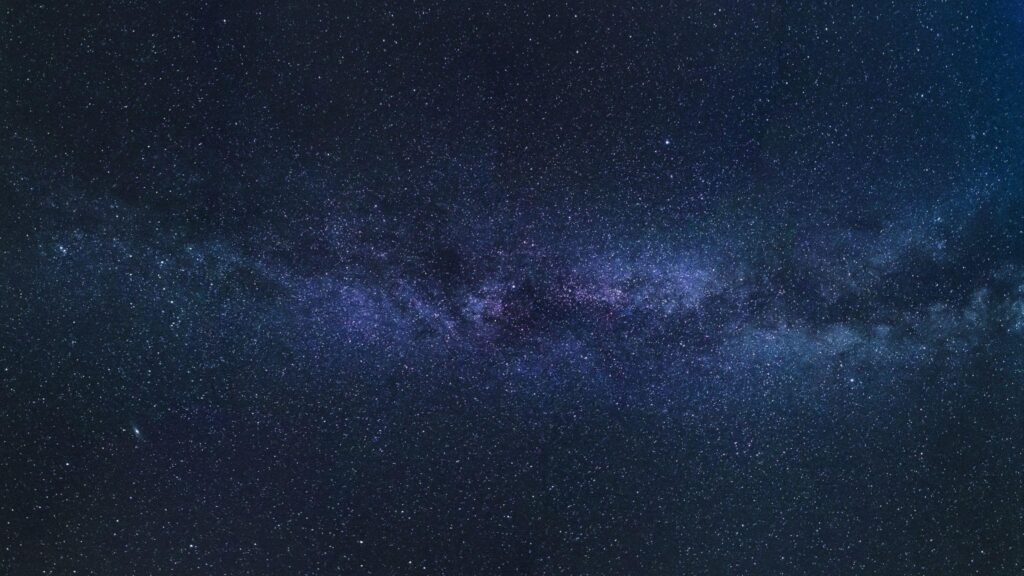
Throughout the history of space exploration, ancient humans have gazed at the sky, recognizing patterns among stars, and named them after their favorite Gods and heroes. The Greeks and Indians went some steps further to say that there were numerous other worlds. It is doubtful if any of them ever thought that we could even travel to those distant worlds. Due to the lack of technology, direct observation of the sky lasted for centuries without a successful attempt to reach space. Thus the human curiosity to discover and investigate them has been going on for centuries.
Early History of Space Exploration
For many centuries it was a common belief in the west that space was not empty. In 350 BCE, the Greek philosopher Aristotle suggested that nature abhors a vacuum in a short horror vacuum. He believed space contained a substance called ether, the medium through which the heavenly bodies move. Many years have passed since the days of Aristotle. Technology has advanced over the years. However, after the Second World War, the United States and the Soviet Union wanted to display their powers by reaching space and the moon to make significant contributions to the history of space exploration. Both superpowers successfully launched rockets, satellites, and even animals into orbit.

Physical space exploration commenced during World War 2. Varna von Braun’s v2 military rocket was the first artificial object to pass the 100 -kilometer threshold, the point at which space was conventionally seen to begin. This rocket also provided the first pictures of Earth from space, taken at a 10-kilometer distance from the earth. In 1949, the United States started to test the effects of space flight on mammals, and Albert the rhesus monkey became the first vertebrate in space, but sadly he perished during re-entry. While the U.S. was experimenting with monkeys, the Soviet Union planned to send dogs into space. Two years later, in 1951, Saigon and Desicc became the first mammals successfully recovered after space flight.
The Top 10 Iconic Moments in the History of Space Exploration
Here are the top 10 iconic moments in the history of space exploration. However, there is a lot about space we don’t know yet.
Sputnik 1 – The First Moment in the History of Space Exploration
On October 4th, 1957, the Soviet Union launched a beach ball-sized satellite, Sputnik 1, into space. Sputnik 1 was the first artificial satellite that floated above our heads in outer space.
Sergei Korolev, who is also known as the father of the Soviet space program, was the designer of Sputnik 1. The main aim was to test the method of placing an artificial satellite into orbit. It weighed roughly 180 pounds and was equipped with two radio transmitters and four antennas. The launch grabbed the world’s attention because it was at the height of the cold war. However, Sputnik 1 helped to push the history of space exploration to a new level.
After the launch, Sputnik continued to broadcast its incessant beeping for 21 days until the onboard transmitter batteries ran out on October 26th, 1957. Although it stopped broadcasting, Sputnik was still able to track, and, despite its lack of sensors, this tiny satellite still returned some valuable data about the Earth’s upper atmosphere.
Sputnik’s orbit almost immediately began to decay, and on January 4th, 1958, Sputnik burned up as it re-entered the Earth’s atmosphere. This tiny, highly polished fear has survived three months in space, completed 1440 orbits of the Earth, and traveled 70 million kilometers while doing so. The only surviving piece of Sputnik 1 is a metal arming key used to prevent contact between the batteries in the transmitter before it was launched. This key is currently on display in the Smithsonian National Air and Space Museum in Washington, DC.
New Horizons’ flyby of Pluto
The spacecraft was launched in January 2006 on a journey intending to study Pluto and its five moons. New Horizons sailed past the dwarf planet at 14 kilometers per second, approaching 12,500 kilometers of the icy world. The historic flyby concluded a three billion-mile nine-and-a-half journey to the solar system’s backyard, a region beyond Neptune.
NASA scientists say Pluto has turned out to be larger than expected. Earlier NASA released the latest image showing Pluto in better detail than ever before, including its distinctive heart-shaped spot. For most of the voyage, the equivalent of flying a hundred and twenty thousand four hundred and seventy-seven times around the Earth, the probe hibernated, saving wear and tear on its systems.
The craft will carry out a detailed analysis of Pluto’s composition and capture high-definition images in what scientists hope will shed light on the makeup of the solar system. It must have the pictures safely in its memory to make contact again, an exciting wait for the scientists as they await a signal from almost five billion kilometers away.
The Voyager Programs
On August 20th, 1977, and September 5th, 1977, the Voyager Program started with two crafts built to last five years and was sent to explore Jupiter and Saturn, respectively. Today, roughly two decades since launch, Voyager 1 and 2 are still out in space exploring more of the great unknown than anything that has ever been done, making significant contributions to the history of space exploration.
The probes have visited all of the outer planets of our solar system plus 48 moons, and both are now far beyond Pluto. Voyager 1 created history when it entered interstellar space in August 2012 and hurtled to the outermost edges of the sun’s Influence.
In interstellar space, we are surrounded by matter plasma from the explosion of the supernovae stars. This is one of the infamous discoveries achieved through the mission of the Voyager. The probes are even prepared for the eventualities that they come into contact with alien life forms, containing images and audio via the Voyager’s golden record.

The Hubble space telescope
Hubble was launched into space on April 24th, 1990, and circles the Earth 15 times a day, gazing into the vast universe. Hubble flies 340 miles above Earth’s surface at a speed of about 5 miles per second. Hubble’s position beyond Earth’s atmosphere gives a clear view of cosmic objects. The Hubble space telescope has several scientific instruments that allow for studying light. The advanced camera for surveys and cosmic origin spectrographs. Hubble can see visible, ultraviolet, and near-infrared light with these instruments. Scientists observe these different wavelengths of light to understand chemical content, density, temperature, and motion and evaluate galaxies, stars, dark energy, and dark matter.

Hubble also has three fine guidance sensors that allow the telescope to point, lock onto, and measure the position of stars. Once the light is processed, antennas beam Hubble’s images and data to communication satellites, and then those signals are sent to stations on the ground. Ground stations transmit the data to NASA’s Goddard space flight center in Greenbelt, Maryland.
The Mars Exploration rover
Although most eyes were focused on the moon landing in the 60s, NASA was also beginning to explore Mars from space. In 1965, NASA began sending orbiters like mariner and Viking to gather close-up images and data. Thirty years later, the first mars exploration rover, the mars pathfinder lander, and the sojourner rover successfully landed on July 4th, 1997.
The small 25-pound six-wheeled rover, designed to last a week, would spend 83 days capturing 550 pictures and taking atmospheric measurements from the planet’s surface. In 2004 twin rovers’ spirit and opportunity landed a few weeks apart and in different locations. These rovers were about the size of a golf cart weighing 400 pounds each and had the same mission to understand the evolution of Mars and to see if liquid water ever existed there.
Spirit stopped communicating in 2010, but opportunity lived well beyond expectations until it stalled in a dust storm 14 years later. In 2012 NASA launched a larger and more technologically advanced rover. It is about the size of a mini cooper, weighs two thousand pounds, and is equipped with 17 cameras and lab-like tools and instruments. Curiosity is still active today in search of evidence that Mars is or ever was capable of sustaining microbial life. In summer 2020, the rover perseverance joined its predecessors on the red planet.
The start of the space shuttle era

For 30 years, the space shuttle program was America’s ticket to the stars. The five shuttle fleets of Columbia, Challenger, discovery Atlantis and Endeavour flew joint 135 missions. Beginning with Columbia’s inaugural launch on April 12th, 1981, as the first reusable spaceship, the shuttles of the space transportation system flew over 542 million miles, made over 201,000 orbits, and carried over 350 people into space.
They played a role in building the international space station and the triumph of the Hubble telescope. The vast majority of shuttle missions were successful, but there were two tragic events; a combined 14 astronauts were killed during the Challenger and Columbia disasters.38 miles above the ground, the space shuttle exploded. When Atlantis landed for the last time in July 2011, it was the end of an era.
First man in space
Having already earned a lead in the space race with Sputnik 1, the Soviet Union further stretched the boundaries of human possibility in 1961 when Yuri Gagarin became the first man in space.
It has been 61 years since the first human ventured into space. On April 12th, 1961, Soviet cosmonaut Yuri Gagarin made history at the age of 27 by completing a single orbit of Earth in approximately a hundred and eight minutes. Yuri Gagarin took flight in a capsule-like spacecraft called Vostok 1, adapted from a soviet intercontinental ballistic missile, the r7 senora. Beginning his flight at the Baikonur cosmodrome in southern Kazakhstan, Gagarin reached a maximum height of 203 miles. Vostok 1 had no engines to slow it for re-entry. So Gagarin successfully landed by ejecting and parachuting back to Earth.
He became a national hero, and the most talked about person on the planet; a global tour followed as the crowd gathered to catch a glimpse of him.
First spacewalk in the history of space exploration
In 1965, the U.S. and Soviet Union manned space programs were fighting to become the first to land a man on the moon. At that point, the Soviet Union led the race. To hold on to their lead, the Soviets were determined to be the first to prove a man could leave the space capsule and walk in space.
On March 18th, 1965, Alexi Leonov and Pavel Belyayev rode their Voskhod 2 spaceship into orbit. Approximately an hour later, while Pavel piloted the craft, Leonov inflated the airlock and crawled in wearing his space suit balloon, sealing the inner opening. Then opened the outer hatch and finally stepped out into space. The young cosmonaut spent 12 monumental minutes making history as he floated outside his ship anchored only by a five-foot tether.
While the mission was a success, in the end, there were endless problems during the walk. Lenovo’s space suit inflated, causing massive difficulties when he tried to return to the ship. After the walk, a rise in oxygen levels led Vokshold to become highly flammable.
Unfortunately, Lenovo’s problems didn’t end there. The Soviet automatic guidance control malfunctioned on re-entry, so Paval had to land the ship manually. He brought the capsule down safely but deep in a snowbank in the Ural Mountains. Eventually, they had to ski and hike to where the helicopters could retrieve them. The two cosmonauts finally returned to the Soviet spaceport 48 hours after landing.
This was not only a mission, a feat of science, but it also proved a problem–solving a master class.
First human on the moon
NASA’s Apollo program made a mark on the history of space travel. The Apollo 8 moon orbit might have earned today’s top spot, but Apollo 11 is humankind’s most momentous moment in space. Sputnik 1 started the space race, then Neil Armstrong, Buzz Aldrin, and Michael Collins ended it on July 20th, 1969. Neil Armstrong became the first person to walk on the moon. He stayed for more than 21 hours with fellow astronaut Buzz Aldrin leaving command module pilot Michael Collins orbiting the moon alone in preparation for their return. In doing so, Collins became the first person to orbit the far side of the moon alone.

Armstrong’s first steps onto the lunar surface and his immortal words made for one of the iconic moments in modern times. Aldrin and Armstrong collected soil and rock samples and planted the American flag before leaving various moments, including an Apollo 1 mission patch and a Soviet medal commemorating Yuri Gagarin. Without any doubt, Apollo 11 stands as a benchmark for space exploration to date.
The first space station
On April 19th, 1971, after America’s history-making Apollo 11 mission, the Soviet Union changed its direction on the space program and focused on creating the first space station.
Salute 1 was launched in April 1971, more than two years before the USA could launch its Skylab program. An unforeseen design issue meant that the first mission sending cosmonauts to the station was aborted. But success came on the second attempt, with the three-person Soyuz 11 crew completing docking and staying on the solute for 23 days. The mission ended in tragedy. However, a faulty valve led to the depressurization of the Soyuz capsule upon re-entry into the Earth’s atmosphere resulting in the killing of all three crewmen.
These are just some of the iconic moments that make up the history of space exploration. From the first human steps on the moon to the breathtaking images of the universe captured by Hubble, the history of space exploration is an ever-evolving tapestry of discovery and wonder.