
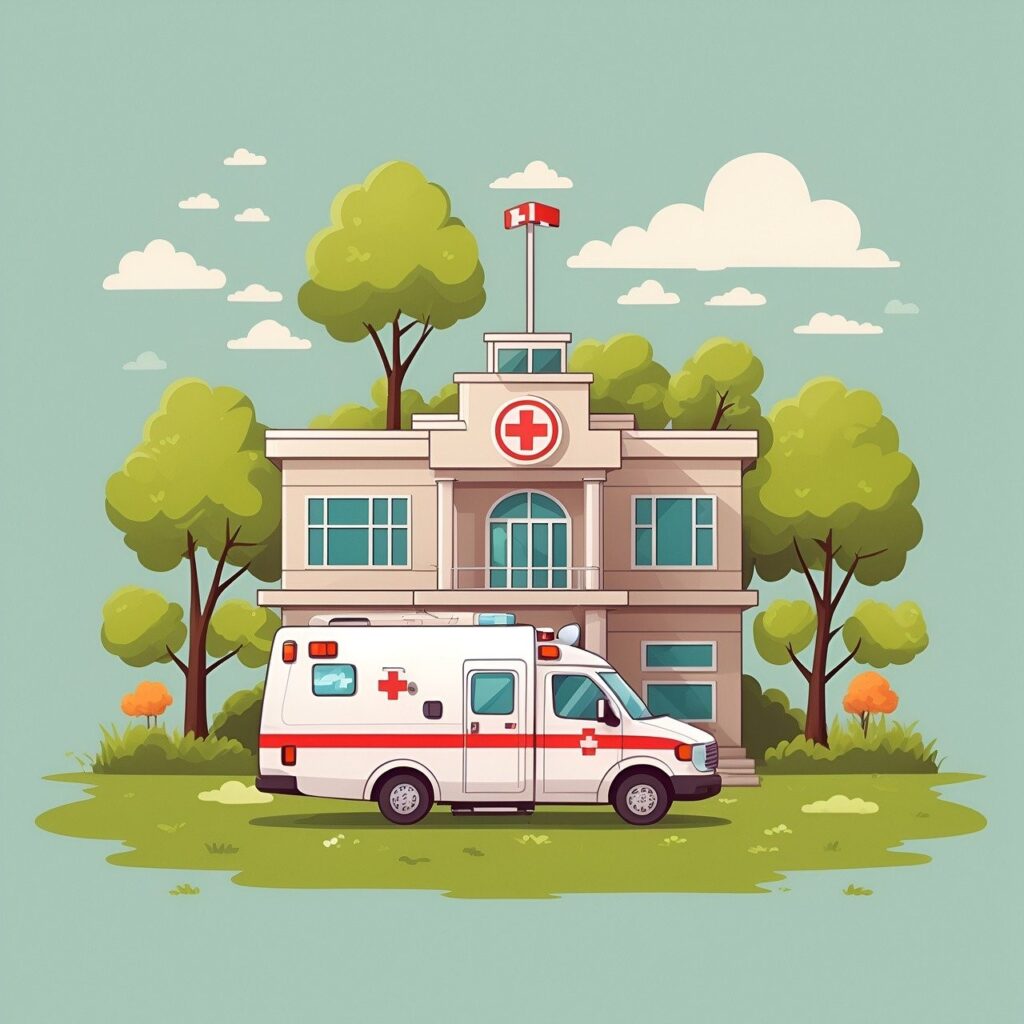
The fluorescent lights flickered ominously above as I guided my mother through the bustling corridors of the emergency room. Her breaths came in shallow, wheezing gasps, each one a knife to my heart. The receptionist’s indifferent gaze barely lifted from her computer screen when I approached, my voice strained and desperate.
“We need help. My mother . . . she can’t breathe.”
“Take a seat. A nurse will call you soon,” she replied, her tone flat and rehearsed.
I wanted to scream at her, to shake her out of her monotony, but instead, I nodded and led my mother to the crowded waiting area.
The minutes dragged on, each one an eternity. Around us, the room was filled with pain and despair. Children cried in their mothers’ arms, elderly patients slumped in wheelchairs, and people clutched their stomachs, heads, or limbs, their faces twisted in agony. The television mounted in the corner played some mindless sitcom, the laugh tracks a cruel mockery of our suffering.
My mother’s hand trembled in mine, her skin cold and clammy. “Just hold on, Mom,” I whispered, though I wasn’t sure if I was reassuring her or myself. “They’ll see us soon.”
A nurse finally emerged, her eyes scanning the room before calling out a name. Not ours. I watched in frustration as another patient was led through the double doors, to the realm of doctors and treatment.
“When will it be our turn? We can do better than this. We have to,” I mumbled to myself as the nurse and the patient disappeared.
It felt like hours had passed before a nurse finally called my mother’s name. I helped her to her feet, supporting her as we shuffled toward the door. But the relief was short-lived. Inside, we were herded into a small room and told to wait once more. A young doctor appeared eventually, his white coat too pristine, his face too perfect to seem competent. He asked a series of questions, barely waiting for answers before scribbling notes and disappearing again. My mother’s breathing was growing more laboured, and I could see the panic in her eyes.
“She needs help now!” I insisted.
He nodded, but his attention was already elsewhere, his pager beeping incessantly. “We’re doing our best. It’s a busy night,” he said before rushing off.

The next few hours were a blur of medical jargon and hurried footsteps. IV lines were inserted, blood was drawn, and tests were ordered. But there was no comfort, no reassurance. Each professional seemed more overwhelmed than the last, their faces lined with fatigue and stress. I watched helplessly as my mother’s condition fluctuated, the machines around her beeping in a confusing symphony of urgency. At one point, a nurse who couldn’t have been much older than me took a moment to squeeze my shoulder.
“I know it’s hard,” she said softly. “But we’re doing everything we can.”
“Why does it feel like no one cares?” I blurted out, tears stinging my eyes. “We can do better. This is unbelievable.”
She sighed, her expression a mix of empathy and weariness. “It’s not that we don’t care. There are just so many patients and so few of us. We’re stretched too thin.”
Her words echoed in my mind as the night dragged on. I watched doctors and nurses dart from room to room, their movements frantic, their expressions harried. I understood, intellectually, the strain they were under. But that did little to ease the knot of fear and anger in my chest.
When the sun finally began to rise, casting a pale light through the hospital windows, my mother’s breathing started to steady. The treatments were finally taking effect. Exhausted, I slumped in my chair, clutching her hand. As I looked around the room, I saw other families, other patients, still waiting, still hoping. I realized then that we were all trapped in the same labyrinthine system, struggling to find a way out.
The emergency room was not a place of quick fixes and instant relief. It was a place of endurance, of fighting through the chaos and the waiting, of holding on to hope even when it seemed impossible. As the new day dawned, I vowed to never forget the faces and stories of those I had seen, to remember that behind every crowded waiting room and overworked staff member was a sea of human lives, each one precious, each one deserving of care and compassion.
1 thought on “Navigating the Pain”
Your blog has become an indispensable resource for me. I’m always excited to see what new insights you have to offer. Thank you for consistently delivering top-notch content!