
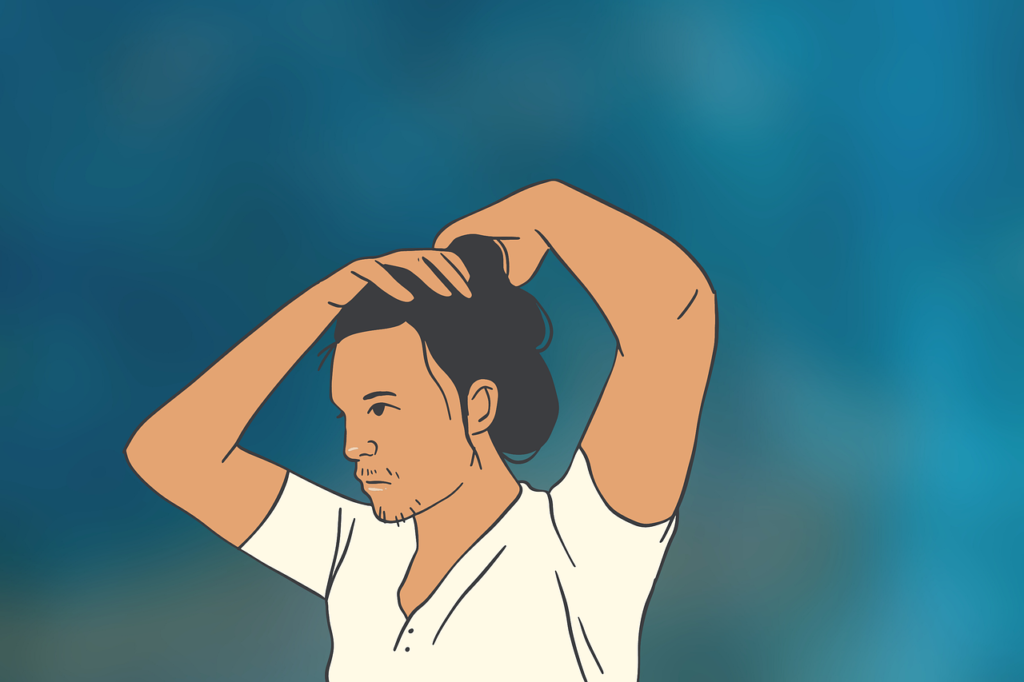
I wonder how different Rapunzel’s story would’ve been if she was South Asian… and a guy.
I was young when I told my parents I wanted to grow my hair out, and immediately, they told me no. When I asked why, they couldn’t give me a direct reason and instead suggested I wait until I was older. So, in that moment, I told my parents that I would grow it out once I got to university and it was a deal that we mutually agreed on.
When I got to university, my hair was shaved on the sides of my head and I had it quite long up top – as was the style in the 2015-2020 era. I really liked that style, so when my mother asked me if I planned on growing my hair out, I told her, “probably not anytime soon”. Eventually, I got sick of that hairstyle and decided to grow it out, but my mother reacted with shock when she discovered I was actually going through with it.
She told me, “You said you changed your mind!”
To which I replied, “Yes, but now I’ve changed it again!”
A hairy situation
Turns out, changing my mind about my hair wasn’t a good enough reason to be left alone. Any time my hair got even a bit longer than my parents liked it, I’d be nagged into cutting it. Needless to say, my hair growth journey was cut short even before it started.
It was only when a global pandemic managed to shut down every barber shop within reachable distance that I was actually able to start growing my hair in 2020. That was the first time in my life when my parents didn’t bug me about it – at least at first. However, as soon as barber shops opened back up, the war began. I had now committed to growing my hair out and my parents were committed to stopping it. What started as passing comments about my hair not looking great turned into nagging requests to get a haircut, and then the requests turned into demands, which turned into full blown arguments. Eventually, I caved and got my hair cut.
Seeking counsel from my older brother, who rarely had the problem of my parents telling him how to style his hair, I asked him what he would do in my shoes, and he said to try again. Hence, every time my hair grew long, I just tried to act like I didn’t notice. Ultimately, the cycle would continue, over and over, for the next two years.
The root of the problem . . .
The constant bickering about the length of my hair made me question what it was that I was going up against. The arguments usually began when my hair got too long for me to take care of with a comb. Though as far as I was concerned, it didn’t hurt anybody else, so I could not understand why my parents strongly objected to something they simply didn’t like the look of. In my mind, it had no impact on anyone else, and at the time, I was already employed, thus there was no fear of losing or not being able to get a job.
I then recalled conversations I previously had with my parents about the way they were raised.
I was raised in Canada. Growing up in the bustling and incredibly diverse neighbourhoods and cities of the Greater Toronto Area meant that the environment at large, including teachers at school, or whoever it may be, were generally accepting of your different looks. My hometown, Mississauga, especially, was incredibly diverse. Frankly, it would’ve been hard not to accept the fact that people come in all shapes and sizes in a place inhabited by people of various backgrounds and an endless combination of looks. This, however, is a stance that I feel only really exists practically in parts of the world that see large immigrant populations.
My parents do not come from one of those places.
A sour seed was planted, well before my time

Both mom and dad hail from Punjab, Pakistan. Although teeming with life, even in the 1980s when they were coming up, their hometown, as is the province of Punjab and the country of Pakistan, is largely racially homogenous. What that means on a day-to-day basis is not that people are racist or bigoted – not at all – but rather that they are just simply not used to people looking different from them. They’re not used to beauty standards that are of another place.
Depending on how you slice it, my parents are roughly the second generation post-partition of India and Pakistan. Although the British had officially left a while ago, much of their life and the things that they were raised with were values left behind by the colonizer. When my parents were in school, they were not raised in an environment that taught you to express yourself or that taught you that having funky hairstyles or cool coloured glasses or different style shoes were forms of acceptable self-expression. There was no accepted form of self-expression when it came to your appearance.
Both of my parents were given uniforms by the school that had to look a certain way. For the girls, their hair had to be tied back into a braid, and for the boys, their hair had to be short and well-kept. Any deviation from the accepted outfit or hairstyle got you punished with letters written home to your parents. In many parts of South Asia, this is still normal today.
A difficult pill to swallow
This, especially for my dad, set a precedent on how he feels like he has to dress and still does to this day. Now in his mid-50s, my dad stresses out when his hair is a touch too long for his liking and doesn’t sit in the exact shape that he combed it into. As a result of his upbringing, my father is simply unable to see my long hair as anything other than bad, or ugly. He just wasn’t raised to be able to see it any other way. To a certain extent, it’s not his fault.
I try to have empathy for my mom and dad, but at times, I find it strange. We, as South Asians, take a lot of pride in our hair. Weaves are one of India’s biggest exports. In the Sikh religion, not cutting your hair is a part of worship. In Islam, the faith that I was raised with, growing your hair out is a recommended act by the Prophet PBUH, known otherwise as Sunnah.
Years of growth, physical and internal

Now that time has passed and I live away from my parents, I can comfortably grow my hair out, but it took me a while to get here. It also brought upon me a harrowing revelation.
I take issue with the phrase that beauty is within the eye of the beholder. Although I will admit it reigns at least partially true with things like favourite colours, I think a lot of what we find beautiful is what is taught to us by those who came before us. Much like our values and our identity.
I think one of the unspoken tragedies of colonization, regardless of when and where it is, is the destruction of identity, especially as it relates to the look of a people; to their beauty standards.