
You haven’t lived until you’ve sailed. — David Sedaris, Theft by Finding: Diaries
Winter’s frosty grip has most of us yearning for the warming horizons of an approaching spring. It just can’t come soon enough.
For others, cold icy conditions provide passage to nirvana. It’s a restless anticipation. They can’t wait to go sailing – ice sailing that is. With ice sailing, one’s adrenaline rises and you can reach high speeds very quickly on the ideal day. It becomes a passion for the outdoor enthusiast.
What is ice boat sailing?
Ice sailing or ice boating originated in 18th-century Netherlands as a means of transporting goods over ice. The concept quickly spread to the United Kingdom. By the mid-1800s, it gained recognition in the United States, Canada, and indeed across the world as a sport by enthusiastic sailors. In Nova Scotia, the interest was minimal initially, but interest soon grew and participants came from all areas of the province.
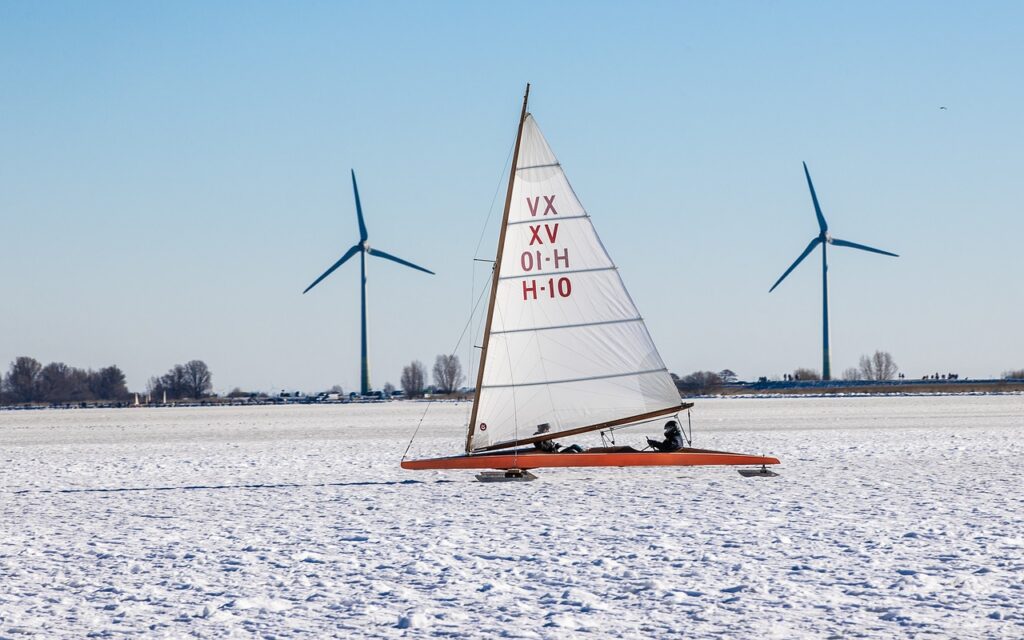
Since its inception, ice sailing has seen a vast array of ice boat designs and subsequent upgrades, all with improved safety and increased speed in mind. The International DN class ice boat is the most popular in the world. It derived its name from the Detroit News newspaper, which in 1937 ran a contest seeking for a one-person designed ice boat that was both easily built and sailed.
The winning design was substantially changed since the 1930s in terms of materials and construction, but still carries on the same aerodynamic fuselage and a 60 square feet sail. Anyone with carpentry skills can build their own depending on the materials used.

The International DN Ice Yacht Racing Association
For such enthusiasts, it is recommended that they join the International DN Ice Yacht Racing Association (the IDNIYRA), which provides newsletters and building plans among other benefits. For others, components can be shipped from places in the United States, such as Maine, at varying costs.
The DN ice boat can move at about two to four times wind speed. Volumes could be written about the dynamics involved with ice sailing. Suffice it to say that sail shape and the friction created between the ice runners (blades) is what propels the boat forward at great speeds, up to over 96 kilometres per hour.
Ice boats don’t have brakes, aside from a parking brake, so there’s a potential danger if rules aren’t followed. The IDNIYRA outlines the rules. For those not racing, they certainly abide by rules established for any sailing vessel. For the novice ice sailor with some basic sailing skills, it’s favorable to take to the ice with a seasoned professional.
Precautions and preparedness
Trying to learn ice boat sailing in high winds can be a bit unnerving. Hitting a rough or bumpy area of ice can cause the runners to lift off the ice. This leads to a sideways skid and sailing at a high speed, which can cause possible injuries. Safe planning and common sense are essential prerequisites.
Ascertain that there are at least four inches of consistent black ice and always wear a helmet, flotation suit, and spiked shoes. Also, beware of changes in wind direction and always keep your feet in the fuselage, never out in front. The most important piece of equipment to wear is pics, which are snow boots with small spikes attached at the soles, in case you happen to enter open water. The spikes on the boots will enable you to crawl back on to the ice.
Ice boat sailing can be an exhilarating and wondrous experience. So, get out and enjoy it with friends and family. You won’t regret it as long as you employ common sense and precautions at all times.