
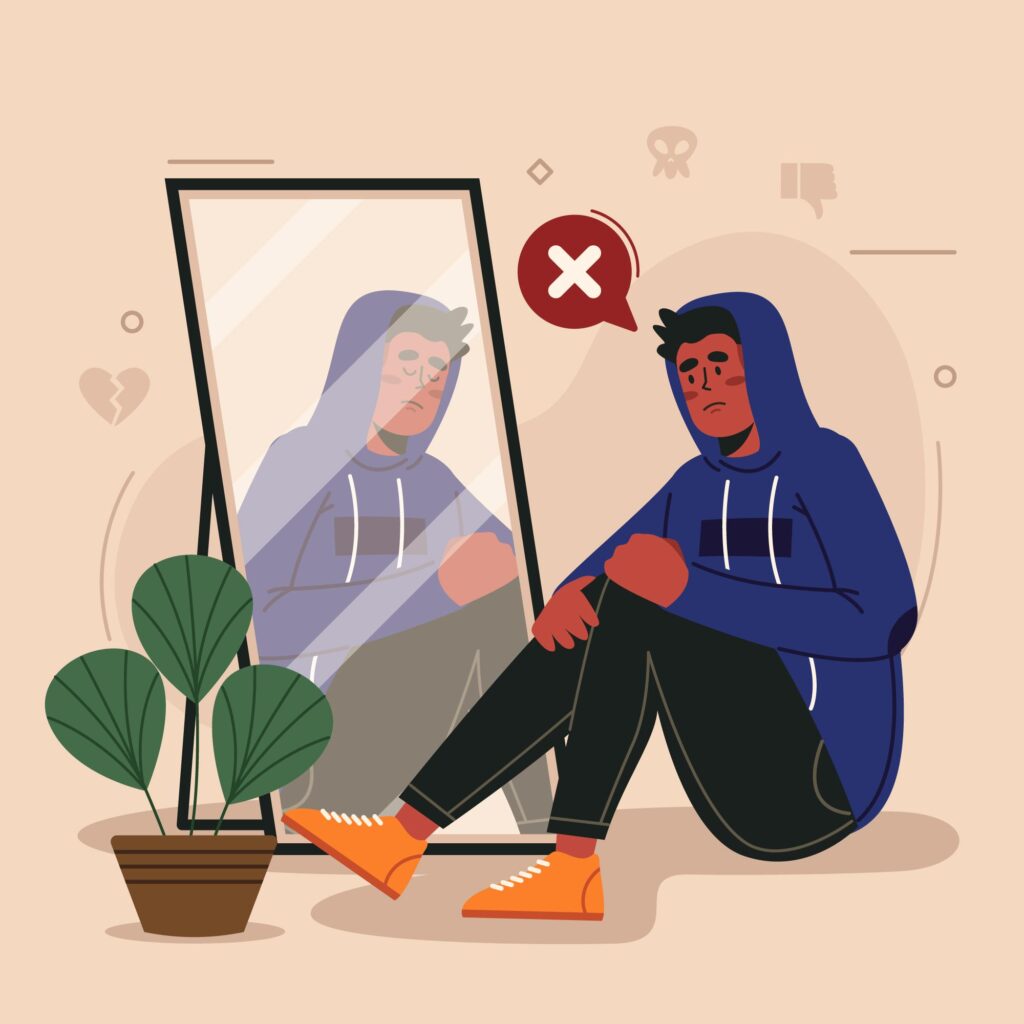
Experiences, influences, and effects
When I was a child, I quickly learned that life can be unfair. My parents split up, leaving my sister and I to pick up the pieces and left me to believe that true love may not be real after all. I learned that platonic relationships are never static, and that friends would turn on you as quickly as they let you in. In fact, I also learned that I couldn’t always trust my instincts. I realized that my body may never meet my high expectations, and that I may never be as intelligent as I wanted to be, even with tremendous amounts of work. As a result of these learned life lessons, I developed poor self-esteem, which led to self-sabotaging behaviour. But I am not alone. Self-sabotage and low self-esteem affect us all in different ways.
What does self-sabotage look like?
Self-sabotaging behaviours are easy to identify because they are actions and thoughts that negatively affect your life. These actions or thoughts could be based on preconceived notions of what you believe you are capable of or what you deserve. Self-sabotaging behaviours most likely stem from unresolved mental or physical trauma. They cause you to believe that you are not worthy of love, greatness, respect, or happiness in general.
Self-sabotage can manifest in different forms. It can manifest in the form of not applying for the position you want because you don’t believe you are qualified for it. For some of you, it can either be pushing yourself too hard at the gym, without giving yourself rest, or just refusing to go to the gym altogether. It can also be refusing to set boundaries with others because you are afraid to lose them.
Identify your own version of self-sabotage
Prakhar Verma’s useful article not only provides more examples of self-sabotage, but also helps to determine certain countering techniques to use in daily life. To battle self-sabotage, one must work to improve low self-esteem and see oneself as worthy of the great things life has to offer. Low self-esteem is a natural human emotion and nothing to be ashamed of.
Battling low self-esteem is not an easy task, but even the smallest of positive changes within yourself and your life can help to move past self-destructive behaviours. For example, if you notice yourself neglecting your mental health by refusing medications or other means of serotonin production, you could reflect on why you are acting in this self-destructive way. You can then write down or think about ways you could counter these tendencies and then implement a plan to move into positive and helpful behaviours.
It is important to understand why self-sabotage occurs, because that will help to design a personal plan on how to combat it. Self-sabotage could occur because of personal reasons. If that’s the case with you, then it will need to be handled carefully and with an inward-looking approach.
Inward-looking approaches can include therapy, time to yourself, time with loved ones, added spontaneity, a new workout routine. The idea is to create a support system to build self-esteem and help you grow into a more confident and assured version of yourself.
Understand, manage, and support yourself
Self-sabotage can also be battled by implementing positive self-talk into your daily life. Affirmations are a great tool. Here are some examples of affirmations:
- I deserve happiness
- I am able to care for myself with love
- I appreciate all of the ways I am able to make myself happy
- I deserve to feel loved and safe
- I deserve greatness
Affirmations can support positive behaviour and therefore help to work against self-sabotage. Such self-talk can also help you “fake it until you make it,” meaning that repeatedly telling yourself these positive affirmations will eventually lead you to believe them. You can find out more about positive affirmations to help you build self-esteem in Jen Kropt’s article.
Summary
These battle techniques are mere examples of how I have worked through my self-esteem issues and self-sabotaging behaviours. In the past few years, I have also started to understand why I choose to self-sabotage. It’s because I believe I know how things will develop. I believe things will always end poorly for me. And while I am working on letting go of such beliefs and letting myself enjoy all aspects of my life, I am also working towards letting myself know how important I am and how important my feelings are.
It can be hard to let go of self-sabotage as living in the past is often comfortable. Moreover, It can be hard to let yourself obtain and feel the things that you deserve. And it can be really hard diving into the unknown and giving yourself a chance.
At the end of the day, it is important to remember that you do deserve to let yourself grow and flourish in positive ways. To help yourself grow, it is essential to identify self-sabotage to be more self-aware and mindful, and furthermore grow into the best possible version of yourself. For further information on self-sabotage and how to combat it, check out Hilary I. Lebow’s article titled, Self-Sabotage: Why You Hold Yourself Back.
No one said personal development is easy, but with the right positive steps, it is possible.