
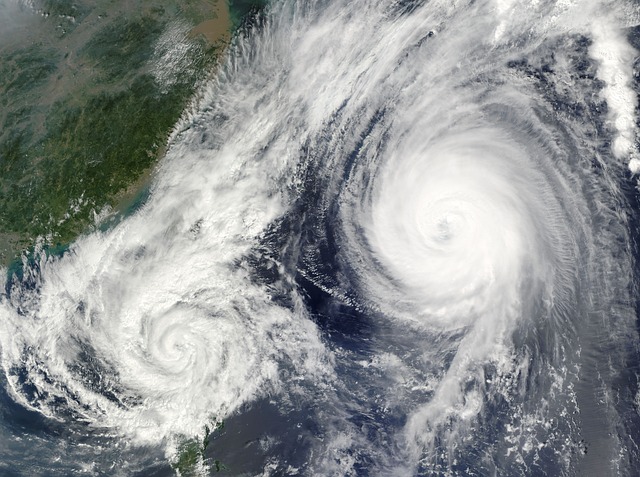
Mother Nature can be a fickle beast. She is unpredictable and answers to her own laws and rules of conduct – an impervious force to be reckoned with. And we’ve seen her at her worst.
Lilapsophobia? Never heard of it? Most people haven’t. Lilapsophobia is a specific fear of tornadoes or hurricanes. And these natural phenomena can indeed be terrifying.
Most would agree that hearing about a possible approaching hurricane instills both fear and trepidation. We never know of the outcome as hurricanes can be so unpredictable. Such variables as wind speed, coverage area, an intensifying or weakening system and trajectory, for example, have to be considered.
Hurricane Season
Hurricane season begins in early June and ends in late November in the Atlantic Ocean with the Atlantic experiencing over 97 percent of these tropical cyclones or tropical cyclogenesis.
Some weather events are more predictable than others. Due to the intricate dynamics of hurricanes, these so-called heat engines can present a challenge in predicting their intensity, even with sophisticated weather monitoring systems. Their intensity can change quite quickly making it difficult to predict rapid changes.
Noting changes in cloud structure or cloud dynamics can perhaps indicate a couple hours in advance of a rapidly changing intensity. Hurricane categories – the Saffir-Simpson scale of 1-5 may not be totally reliable as this scale measures wind speed without considering possible severe rainfall amounts that may cause flooding in those prone to low-lying areas. In fact, a large Category 1 hurricane may cause more damage than a small Category 5.

Storm Surge
Aside from high winds and rain, storm surge can be a real concern for those living along coastal areas and is perhaps the most dangerous and damaging. The height of the storm surge will be dependent on various factors including hurricane intensity, wind speed, shape of sea floor, angle of approach and surrounding islands and bays that can amplify the surge effect.
It is crucial to realize that although it may be tempting to observe a hurricane in action from the shoreline, it is a dangerous place to be. Numerous observers have been swept out to sea by high waves. Use common sense at all times.
Preparing For Hurricane Season
Preparation is the operative word with news of an impending hurricane. A proactive approach to protecting both yourself and your property will require some diligent planning and is worth the effort. This holds true not only for hurricanes but any adverse weather conditions – think long and short-term especially if you reside along the coast and are prone to flooding. Consider constructing a breakwater or situating yourself in a better position.
When informed of an approaching hurricane, prepare in terms of having enough food, water and other provisions readily at hand and anticipate power outages possibly for a few days. Such preparation includes:
- Filling bathtubs for flushing, washing and cleaning.
- Moving inside all lawn furniture, trash cans and any other outside items that could become windborne causing damage or injury.
- Filling your vehicle’s gas tank.
- Stocking up on non-perishables and a manual can opener.
- Stocking up on batteries.
- Using flashlights and avoiding candles.
- Having an emergency supply kit.
- Securing your home – wind shutters, drainage ditches to divert water, and roof straps, if possible.
- Trimming dead branches especially around power lines.
And remember if an evacuation order is issued, heed all warnings and return to your home only when notified that it is safe to do so.
Always be prepared. Leave nothing to chance. Your life, the lives of those you love and your home are depending on your foresight and proactiveness.